Fenugreek, Clove, Star Anise and More: What Six Spices Actually Do
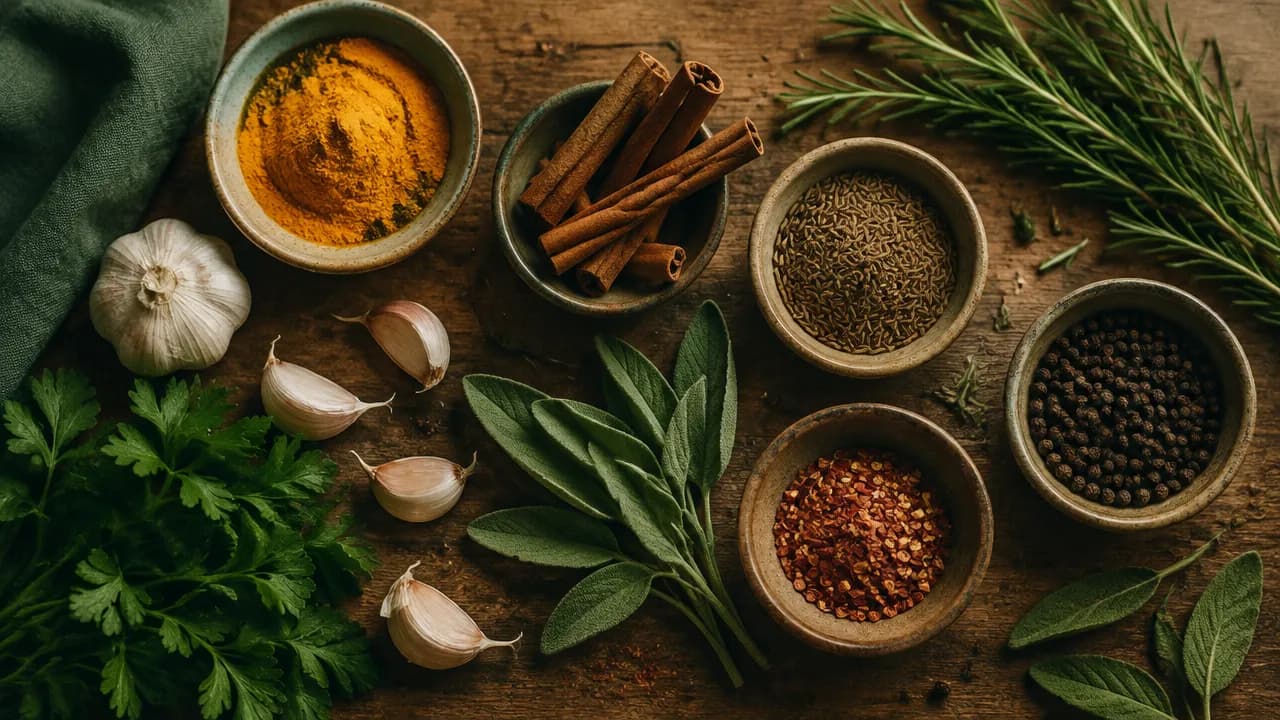
Most articles about spice benefits read the same way: a list, one sentence of praise each, no sources, and a quiet implication that your spice rack is medicine. This one is built the other way around. For each spice below the question is what published research and regulators actually say — including where the honest answer is that nobody really knows, and where there is something you should genuinely be careful about.
Two things are worth getting straight first, because almost all bad spice advice comes from skipping them.
The first is that nearly all the research uses extracts, not cooking. Studies are run on concentrated capsules and standardised extracts at doses far above anything you would season dinner with. A trial on a fenugreek extract says very little about a teaspoon of seeds in a curry.
The second is that an interesting compound is not an effect. A spice containing a molecule that does something in a laboratory dish is not the same as the spice doing something in a person. That gap is where most of the confident claims live.
Fenugreek seeds
Fenugreek is the bitter, faintly maple-scented seed behind a lot of curry powders and the sweet halva sold across India and the Middle East. It is also the most studied spice on this list.
The US National Center for Complementary and Integrative Health summarises the evidence carefully: research has suggested that fenugreek may help lower blood sugar levels in people with type 2 diabetes, but many of the studies were not of high quality. On increasing milk supply while breastfeeding, studies have had mixed results. On menstrual cramps, the evidence is of low quality and the effects uncertain.
So there is a real signal on blood sugar, coming from studies that are not strong enough to build on. That is a different statement from the flat claim that fenugreek lowers blood sugar, and the difference matters a great deal if you are making decisions about diabetes.
Be careful if you are pregnant. NCCIH is unambiguous that fenugreek is not safe during pregnancy in amounts greater than those found in food, and links such use to increased risks of birth defects. High doses can also push blood sugar down too far, and fenugreek can cause diarrhoea, nausea and, less often, serious allergic reactions.
In the kitchen: toast the seeds briefly and do not look away. They turn harsh the moment they go past golden, and a small quantity carries a whole pot.
Clove, and clove tea
Clove is the dried flower bud of an evergreen tree, and its character comes almost entirely from eugenol, the same compound dentists have used on toothache for generations.
Here the important distinction is not between hype and evidence but between two very different things that share a name. Cloves in your cooking, and clove tea, are not the same as concentrated clove oil. The oil is where the documented harm is.
MedlinePlus describes eugenol oil overdose plainly: as little as 10 millilitres in adults, or smaller amounts in children, can have serious effects. Those effects include seizures, coma, rapid heartbeat and liver failure, with liver failure noted as especially a risk in children. Eugenol oil turns up in toothache remedies, flavourings, lotions and e-cigarette refills, which is exactly how a small bottle ends up somewhere a child can reach it.
Treat clove oil like a medicine, not a seasoning, and keep it out of reach of children. None of that is an argument against cloves in a braise or a cup of clove tea.
In the kitchen: use whole cloves in anything that simmers for a long time and fish them out before serving. Ground clove is far stronger than people expect and will take over a dish in seconds.
Star anise
Star anise is the most interesting spice on this list, and the one with the clearest safety story.
Its flavour is almost entirely one compound: trans-anethole makes up around 72 to 92 percent of the essential oil. It also contains shikimic acid, and this is where it gets genuinely remarkable. Shikimic acid is the commercial starting material for oseltamivir, the antiviral sold as Tamiflu, and much of the supply has been extracted from Chinese star anise.
It is very tempting to turn that into a claim that star anise tea fights flu. It does not. Shikimic acid is a chemical starting point that goes through a multi-step industrial synthesis to become a completely different molecule. A raw material for a drug is not the drug, any more than flour is bread.
The real caution is about which star anise you have. In 2003 the FDA advised consumers not to give star anise tea to infants and children, after about 40 people including roughly 15 infants became ill over two years. Symptoms ranged from vomiting and jitteriness to seizures. The cause was contamination: Chinese star anise, Illicium verum, is the culinary one, but it can be adulterated with Japanese star anise, Illicium anisatum, which is toxic and sold as a decorative item. Everyone affected recovered.
Star anise tea is a traditional remedy for colic in several countries. Do not give it to a baby. For an adult cooking with whole pods from a normal food supplier, this is not the same level of concern.
In the kitchen: one or two whole pods are plenty for a large pot of broth or a braise. Star anise is the backbone of Vietnamese pho and Chinese five-spice, and it dominates quickly.
Fennel seeds
Fennel seeds taste of mild anise and are chewed after meals across South Asia, which is also their oldest claimed use: settling digestion.
The honest position is that fennel has a long traditional record and thin modern evidence. What it does have is a specific regulatory caution that is almost never mentioned in articles about fennel.
Fennel contains estragole, a compound European regulators want limited in young children. The European Medicines Agency guidance on estragole-containing herbal products is that use is not recommended in children under four years of age, that between four and twelve it should be short-term only, and that intake in pregnant and breastfeeding women should stay below 0.05 mg per day. That guidance concerns fennel preparations taken as a remedy, including fennel tea given to infants, rather than the pinch of seed in a sausage.
In the kitchen: toast and crush them for pork, oily fish, tomato sauces and bread. Crushing matters more than quantity.
Licorice root
If you take one thing from this article, take this one. Licorice root is the spice here most likely to cause a real problem, and it is sold as a gentle herbal tea.
On benefits, NCCIH is blunt: there is not enough high-quality evidence to clearly support licorice root for any health condition.
On harm it is specific. Licorice contains glycyrrhizin, which can cause serious adverse effects such as irregular heartbeat and cardiac arrest, especially when consumed in large amounts or over a long period. And the threshold is not high for everyone: even small amounts of glycyrrhizin from licorice root products have been linked to severe adverse effects in people who consume a lot of salt, in people with hypertension, and in people with heart or kidney conditions.
NCCIH also notes that consuming oral licorice extract in large amounts during pregnancy, around 250 grams of licorice per week, is unsafe and raises the risk of delivery before 38 weeks.
If you have high blood pressure, a heart condition or a kidney condition, licorice root tea is not a neutral choice. It is the one item here where calling it just a herbal tea is actively misleading. Deglycyrrhizinated licorice, sold as DGL, has the compound removed, which makes it a different product.
Bay leaves
Bay has the thinnest evidence of the six, and it would be easy to pad this section out. I will not.
Bay leaf is an aromatic. It gives slow-cooked food a background note you notice mainly when it is missing. I could not find high-quality human research supporting any specific health claim for culinary bay, and the confident claims you will read elsewhere about blood sugar and digestion are not resting on anything solid.
The one practical point is physical rather than medical: whole bay leaves do not soften with cooking. They stay stiff and sharp-edged, which is why every recipe tells you to take them out before serving, and why they are a bad idea in anything blended or eaten by small children.
In the kitchen: one or two leaves in stock, beans, tomato sauce or a braise, added early and removed at the end.
How to actually use these
None of this requires a routine. Whole spices keep their character for a year or more and ground spices lose it in months, so buying whole and grinding as needed is the single change that makes the biggest difference to how food tastes.
Toast whole seeds in a dry pan for under a minute before grinding. Add ground spices to hot fat rather than to liquid, since the aromatics are fat-soluble. Put whole pods and leaves in early and take them out before serving. That is most of it.
What we could not verify
This article is built from published research and regulatory guidance, not from testing. A few limits are worth stating outright.
Nothing here was tested. I have not run anything, measured anything or compared brands. Where a claim is made it comes from the sources listed below, and where the sources are weak I have said so rather than filling the gap.
Culinary doses are largely unstudied. Almost all of the research above used extracts and supplements. Whether a teaspoon of fenugreek in dinner does anything measurable is not something the evidence answers, and anyone telling you it does is going beyond what has been shown.
No brand or supplier was assessed. Quality, purity and adulteration vary, and the star anise case is a direct example of why that matters. I cannot tell you which supplier is reliable.
None of this applies to you specifically. Every caution above is general. Whether a spice is a problem for your blood pressure, your pregnancy or your medication is a question for someone who knows your history.
Sources
- National Center for Complementary and Integrative Health — Fenugreek
- National Center for Complementary and Integrative Health — Licorice Root
- MedlinePlus — Eugenol oil overdose
- US Food and Drug Administration — 2003 advisory on star anise tea
- Illicium verum (star anise) and trans-anethole as raw materials for medicinal and cosmetic applications
- Shikimic acid as an intermediary model for the production of drugs effective against influenza virus
- European Medicines Agency — Public statement on herbal medicinal products containing estragole
Keep reading
Food to Wake You Up: What Actually Works, and What Doesn't
The afternoon crash is mostly not your lunch. What is measured is meal size, and one food that genuinely works at a cost you may not want to pay.
Food is Medicine!
What you eat has a direct impact on how you feel. How different foods affect your health, plus recipes and tips to make healthy eating easier.

Stomach Rolls When You Sit Down: What They Actually Are
Everyone selling you a fix for this is selling a fix for the wrong thing — and the fat you can see folding is the kind that matters comparatively least.

How to Lose Belly Fat Without Losing Muscle
Two randomised trials point in different directions about how fast to lose weight. What separates them is probably the thing nobody puts in the headline.