The Sleep Reset: A Simple 7-Day Plan for Better Rest
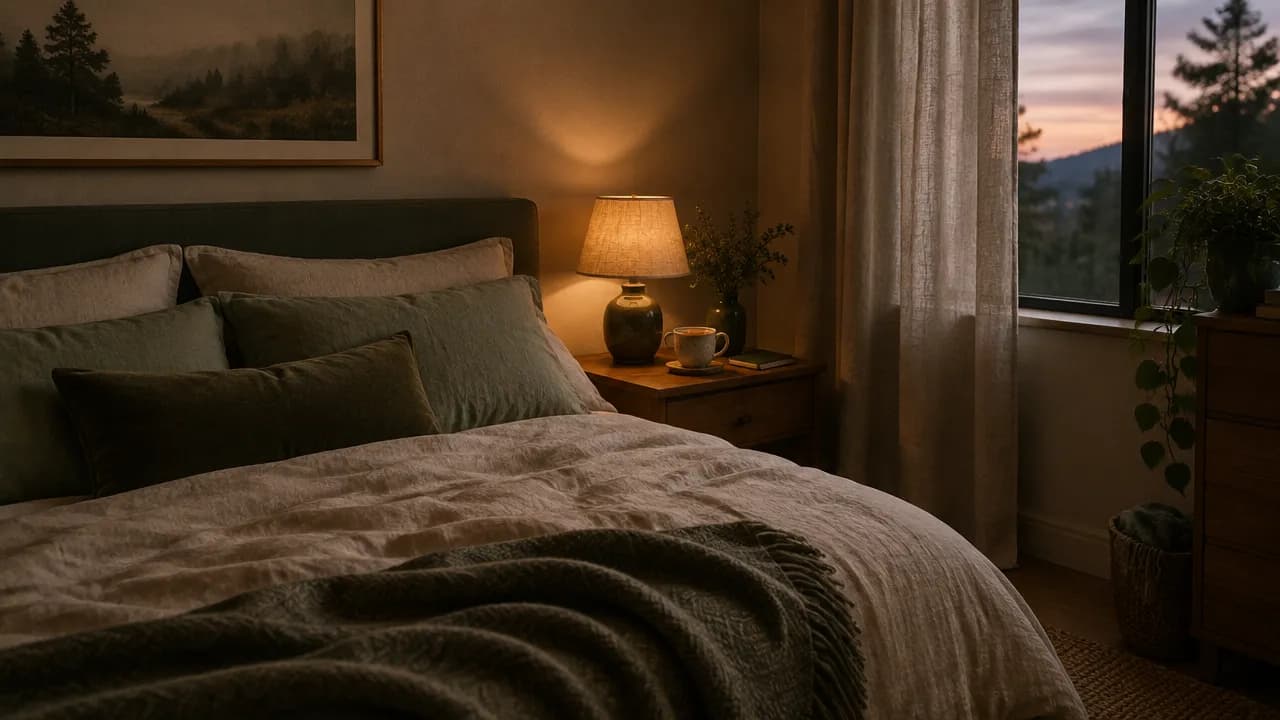
Sleep advice tends to arrive as a wall of rules: no screens, no caffeine after noon, a cold dark cave of a bedroom, a fixed bedtime down to the minute. Useful in theory, hard to sustain in a real week. This reset spreads the adjustments out one day at a time so none of them feel overwhelming.
Day 1-2: Anchor your wake time
Rather than chasing an earlier bedtime first, fix your wake-up time and keep it consistent, weekends included. A stable wake time is the single strongest lever for regulating your circadian rhythm, and it makes every other change on this list easier.
Day 3: Build a wind-down cue
Pick one small, consistent action — dimming the lights, a specific playlist, herbal tea — that you do every night starting about 30 minutes before bed. Repetition turns it into a signal your brain learns to associate with sleep.
Day 4: Cut the second half of your caffeine window
Caffeine has a half-life of five to six hours, meaning a 3pm coffee can still be a quarter-strength coffee in your system at 9pm. Try shifting your last cup earlier and notice whether falling asleep gets easier.
Day 5: Get the room properly dark and cool
Aim for a bedroom in the range of 65-68°F (18-20°C) and as dark as you can reasonably make it. Body temperature drop is part of what triggers sleep onset, and darkness supports melatonin release.
Day 6: Give your brain a shutdown ritual
Racing thoughts at bedtime are often unfinished business from the day. A two-minute brain dump — writing down tomorrow's tasks or anything unresolved — can quiet the mental loop that keeps you scrolling instead of sleeping.
Day 7: Protect the last hour before bed
This is the hardest one, and it's placed last on purpose. Try keeping the last hour before bed screen-light-free, even partially. Notice how it changes how quickly you drift off, and keep whatever worked.
By the end of the week you won't have a perfect sleep routine — nobody does — but you'll know which one or two changes actually moved the needle for you, which is worth more than any generic rulebook.
Keep reading
How to Sleep Through the Night Without Waking Up
Waking in the night is normal. Not getting back to sleep is the actual problem — and the technique with the most evidence behind it is not on any sleep hygiene list.
Why You Can't Sleep After Drinking, or After a Late Workout
Two common reasons a night goes wrong, two completely different mechanisms — and one piece of standard advice that the evidence does not support.
Why Am I Still Tired No Matter How Much I Sleep?
Three different things get called “still tired”, and they have different answers. Sorting out which one you have is worth more than a list of twelve causes.
Tired but Can't Sleep: Why Exhaustion Doesn't Make You Sleepy
Being worn out and being sleepy are measurably different states. That is why the usual advice misses — and why the cortisol you keep being sold rests on a study of twenty-four people.