Why Am I So Fatigued After Working Out?
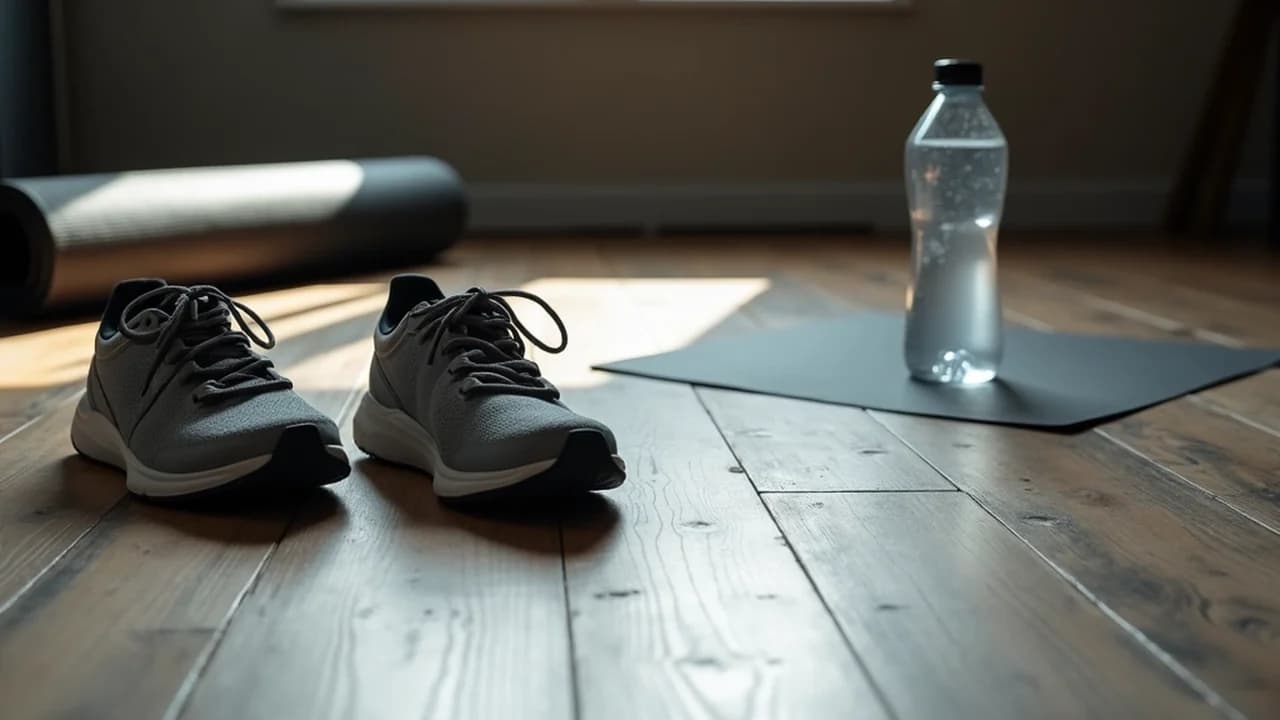
You finish a session and you are not pleasantly tired. You are flattened — for the rest of the afternoon, sometimes into the next day.
Search for an explanation and the first page of results is a gym chain, a shoe company, a running blog, an exercise bike company and two apps. Everyone ranking has something to sell you about recovery. The one university hospital on that page sits at number nine.
So here is what the research actually says, starting with the part that nearly every one of those pages gets wrong.
Lactic acid is not doing this
The lactic acid story is the most repeated explanation in fitness, and it has been discredited for years.
A review in the Journal of Physiological Sciences gives two reasons it cannot be right. First, concentric exercise, which involves greater metabolism, fails to produce muscle soreness — if lactate were the culprit, the contractions that generate more of it would hurt more, and they do not. Second, and more simply: lactic acid levels return to pre-exercise levels within an hour.
Whatever is wrong with you the next morning, it is not a substance that left your bloodstream before dinner. Anything sold to you for flushing out lactic acid is solving a problem that solved itself.
Soreness and fatigue are different, and the clock tells you which is which
These get mixed together constantly, and separating them is the most useful thing you can do.
Delayed onset muscle soreness has a very specific timetable. The same review describes it: it appears after a pain-free period of 12 to 24 hours, peaks at 24 to 72 hours, and disappears within seven days. If what you feel is tenderness that was absent right after training and arrived the next morning, that is DOMS, and the schedule is the giveaway.
Acute fatigue right after a session is a different thing, and for most sessions it should be measured in hours, not days.
So if you are wiped out for three days with no soreness at all, you are not describing DOMS and the recovery advice written for DOMS does not apply to you.
Overreaching is real, and nobody can test you for it
The sports medicine term you want is on a spectrum, and it comes from a joint consensus statement of the European College of Sport Science and the American College of Sports Medicine.
The statement distinguishes functional overreaching — a short-term drop in performance without severe or lasting symptoms, which turns into improved performance after recovery — from non-functional overreaching, which happens when training and recovery stop balancing, and from overtraining syndrome.
Now the part that the recovery industry does not advertise. On the tests used to detect this, the consensus is blunt: several markers are used — hormones, performance tests, psychological tests, biochemical and immune markers — “but none of them meet all the criteria to make their use generally accepted”.
There is no blood panel that diagnoses overtraining. There is no readiness score, no heart rate variability threshold, no wearable metric that does it either. The statement describes the distinction between non-functional overreaching and overtraining syndrome as “very difficult” and dependent on an exclusion diagnosis.
It is even more careful than that. On whether overtraining syndrome produces worse symptoms than non-functional overreaching — the assumption the whole ladder rests on — it says there is “no scientific evidence to either confirm or refute this suggestion”.
What the consensus says to rule out first
This is the genuinely useful part, and it is not about training load.
Before concluding that someone is overtrained, the consensus lists what to exclude: organic disease and infection, dietary caloric restriction and negative energy balance, insufficient carbohydrate or protein intake, iron deficiency, magnesium deficiency and allergies.
Read that order again. Eating too little comes before training too much.
Underfuelling has its own literature now. The International Olympic Committee's 2023 consensus statement describes low energy availability as inadequate energy intake relative to exercise energy expenditure, producing a syndrome of harmful health and performance outcomes — and the 2023 statement is explicit that this affects male as well as female athletes, which earlier versions were read as not covering. If you increased your training and did not increase your food, that is the first candidate, not the last.
Iron is the other one worth naming. The NHS lists tiredness and lack of energy, shortness of breath and noticeable heartbeats among the symptoms of iron deficiency anaemia, with heavy periods and pregnancy as very common causes. It is diagnosed with a full blood count, which is about as cheap and ordinary as a test gets. If you train hard and have heavy periods, this belongs near the top of your list rather than at the bottom.
What to actually do
Write down the timing for two weeks. When the tiredness starts, how long it lasts, and whether soreness comes with it. That one sheet of paper distinguishes DOMS from fatigue better than any article can, and it is what you would be asked about anyway.
Eat more around training before you buy anything. It is the first thing the consensus excludes, it costs nothing, and the supplement aisle has no equivalent.
Take a planned easy week. Functional overreaching resolves with recovery — that is its definition. If seven easier days leave you feeling better and performing better, you have your answer for free.
Ask for a blood test rather than guessing, if it persists. Iron is the obvious one; a doctor will know what else is worth checking.
And check the nights. Training hard on broken sleep produces exactly this complaint. If you are tired no matter how much you sleep, the workout may be the trigger rather than the cause, and a late hard session has its own effect on getting to sleep.
When this is the wrong article
Chest pain, fainting or breathlessness that is out of proportion to what you were doing is not something to read about. That is a same-day medical question.
So is fatigue that has run for months, or that comes with unexplained weight loss, fever or night sweats. None of that is a training problem.
What we could not verify
Nothing here was tested. This is drawn from published research, and I have not measured anything.
The DOMS mechanism is not settled. What is settled is that lactic acid is not the cause. The proposed pathways involving nerve growth factor and other neurotrophic factors are a current explanation, not a closed case, and the paper I used is a review rather than a trial.
The overtraining consensus is from 2013. Marker research has continued since, and I have not surveyed what changed. I used it because it is still the joint position of two major bodies, and because its central admission — that no marker is generally accepted — is the kind of statement that does not usually get weaker with time.
The severity ladder is softer than it sounds. The consensus itself says there is no evidence confirming or refuting that overtraining syndrome is worse than non-functional overreaching.
The low energy availability research is largely in athletes, not in people who go to the gym three times a week. Whether the same thresholds apply to recreational training is not something I can tell you.
Two of the four sources were read as abstracts only — the overtraining consensus and the IOC statement. The DOMS review and the NHS page were read in full.
I am not a doctor, a dietitian or a coach.
Sources
- Delayed onset muscle soreness: involvement of neurotrophic factors (J Physiol Sci) — mechanism, time course, and the case against lactic acid
- Prevention, diagnosis and treatment of the overtraining syndrome: joint consensus statement of the ECSS and the ACSM (Meeusen et al., Med Sci Sports Exerc, 2013) — abstract only
- 2023 International Olympic Committee consensus statement on Relative Energy Deficiency in Sport (Br J Sports Med) — abstract only
- NHS — Iron deficiency anaemia: symptoms, causes and diagnosis
Keep reading
How to Lose Belly Fat Without Losing Muscle
Two randomised trials point in different directions about how fast to lose weight. What separates them is probably the thing nobody puts in the headline.

Move More Without a Gym Membership
You don't need equipment, a class schedule, or a commute to build a real movement habit. Here's what actually works.

Stomach Rolls When You Sit Down: What They Actually Are
Everyone selling you a fix for this is selling a fix for the wrong thing — and the fat you can see folding is the kind that matters comparatively least.

Why Am I So Irritable All the Time?
The largest synthesis of sleep and emotion research found something unexpected: losing sleep does not reliably make you angrier. It reliably takes away the good feelings, which from the inside is the same thing.